Is Online Therapy as Effective as In-Person Therapy?
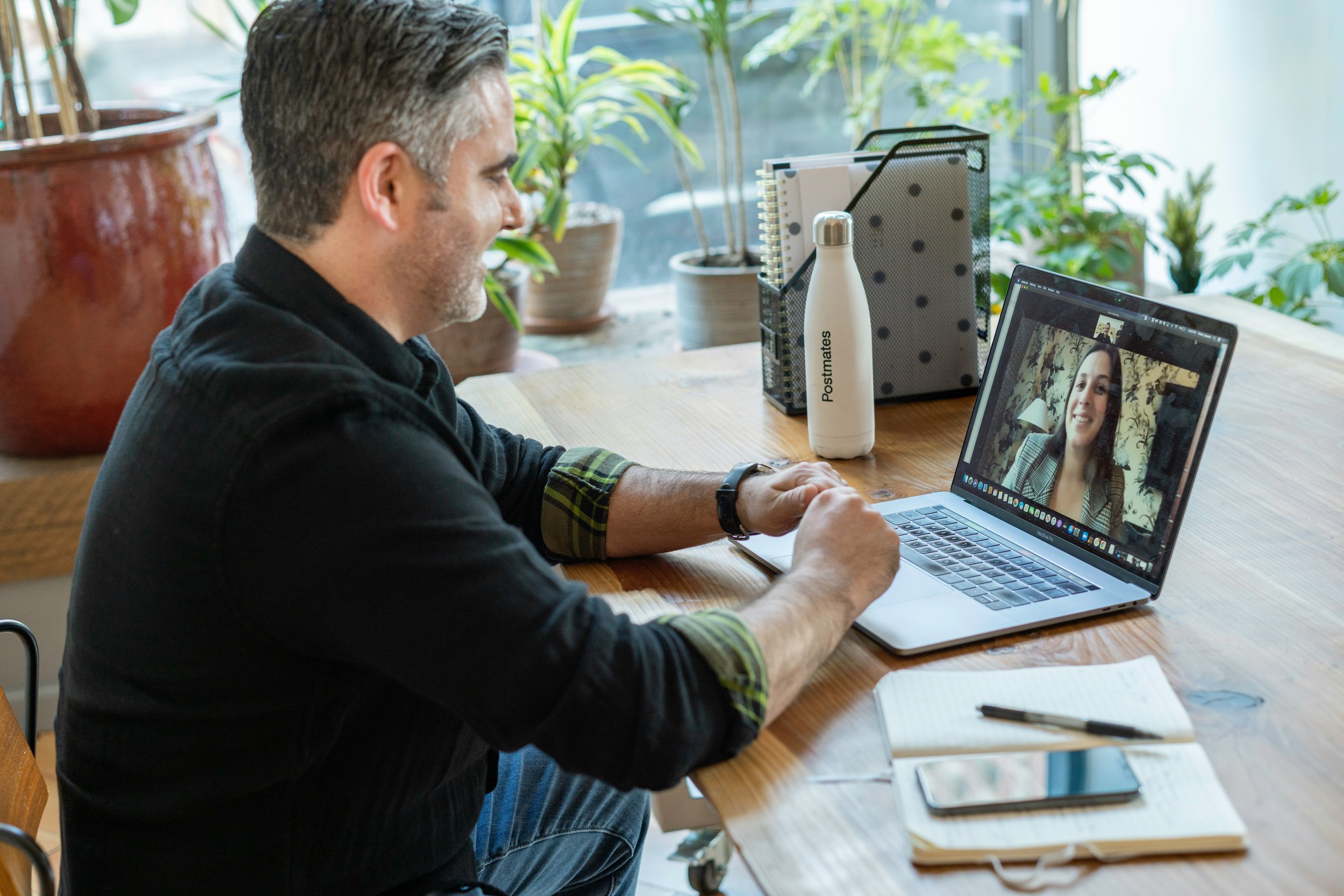
The ability to have virtual conversations is kind of a modern-day miracle, right!?
I offer in-person and online therapy. One of the most common questions I get from potential clients is "Is online therapy as effective as in-person therapy?"
My answer is: in many cases, absolutely yes.
In fact, for some people, online therapy might be the difference between getting help and not having therapy at all.
As a therapist, I've worked with college students, busy professionals, adults navigating life transitions, and people managing anxiety, depression, relationship stress, and trauma. Over the years, I've learned that the effectiveness of therapy often has less to do with whether we're sitting in the same room and more to do with whether therapy fits realistically into your life.
The Real Question Isn't "Is Online Therapy Effective?"
For many people, online therapy makes that possible.
I've worked with countless college students juggling classes, jobs, internships, social obligations, and extracurricular activities. I've also worked with adults balancing demanding careers, parenting responsibilities, and busy schedules.
Adding travel time before and after therapy can sometimes be the difference between attending sessions regularly and giving up on therapy altogether.
Therapy only works if you can consistently make space for it.
Who Tends to Thrive in Online Therapy?
In my experience, online therapy can be especially beneficial for:
College students with demanding schedules
Adults with heavy workloads
People experiencing anxiety or depression
Individuals navigating life transitions
People dealing with relationship stress
Clients working through trauma
People who don't have easy access to transportation
Anyone who lives outside of my local area
Because I'm licensed in New Jersey, Florida, Massachusetts, and Vermont, I can work with clients who don't live near my office in Red Bank, New Jersey. And if I start working with you in a state I mentioned, I can even work with you later in Connecticut.
This has opened doors for many people who otherwise would have struggled to access quality therapy.
Who Might Prefer In-Person Therapy?
Online therapy isn't the perfect fit for everyone, and that's okay.
Some people simply prefer being in the room with their therapist.
You might prefer in-person therapy if:
You find it difficult to focus during Zoom calls
Technology feels stressful or frustrating
You enjoy getting out of the house
You value a change of scenery
You prefer face-to-face interactions and in-person energy
There is something valuable about sharing physical space and picking up on every possible non-verbal cue.
Sometimes people simply know that they prefer that experience, and that's a perfectly valid reason to choose in-person therapy.
What Clients Often Discover After Trying Online Therapy
I've had clients who were initially skeptical about online therapy completely change their minds.
One college student worried that meeting online would feel awkward. Instead, he discovered that virtual sessions fit naturally into his day without using up valuable time commuting to and from my office.
Another adult client worried she wouldn't be able to connect with me through a screen. After several sessions, she realized her fears were unfounded once therapy got rolling.
The therapeutic relationship developed exactly as it would have in person.
Honestly, one thing that surprised me over the years was something practical: online therapy often reduces cancellations.
Life still happens, but online therapy makes it easier to continue treatment despite obstacles like:
Bad weather
Minor illnesses
Broken bones or temporary injuries
Unexpected schedule changes
Sometimes flexibility is one of the biggest benefits.
Two Myths About Online Therapy
Myth #1: I Won't Build a Connection With My Therapist
This is probably the biggest concern I hear.
But here's what I tell clients:
You will have my undivided attention for 45-60 minutes, whether we're meeting virtually or in person.
The therapeutic relationship isn't built by sharing physical space. It's built through trust, consistency, empathy, and meaningful conversations.
If we're going to connect, the technology will not be what stands in the way.
Myth #2: Online Therapy Will Feel Impersonal
This simply hasn't been my experience.
You will get the authentic me either way.
You'll receive a treatment plan personally tailored to your goals, challenges, and life circumstances.
The work remains deeply personal regardless of where we're sitting.
My Honest Opinion
If online therapy allows you to access therapy that you otherwise wouldn't have, then online therapy is awesome.
If meeting from the comfort of your own home helps you open up more easily, that's wonderful too.
And if you prefer coming into my office because you enjoy the face-to-face experience and getting out of the house, that's great as well.
This isn't a competition between online and in-person therapy.
It's about finding the format that helps you show up as your best self.
Ready to Give Online Therapy a Try?
If you've been dismissing online therapy as "less than," I encourage you to reconsider.
You may be surprised by how natural, connected, and effective it feels.
Whether you're a college student, a busy professional, someone navigating a major life transition, or simply someone who wants therapy to fit more seamlessly into your life, online therapy may be exactly what you need.
I offer both in-person sessions in Red Bank, New Jersey, and virtual therapy for clients located in New Jersey, Florida, Massachusetts, and Vermont. In some circumstances, I may also be able to continue working with established clients who are temporarily located in Connecticut after beginning therapy in a state where I'm licensed.
If you're curious whether online therapy is a good fit for you, schedule a free consultation. We can talk about your goals, answer your questions, and decide together which format makes the most sense for your life. 908-907-3636